Technical Debt: How AI-Generated Code Impacts Maintainability
Explore the hidden costs of AI coding assistants. Learn how LLM-generated boilerplate, inconsistent patterns, and lack of context accelerate technical debt.
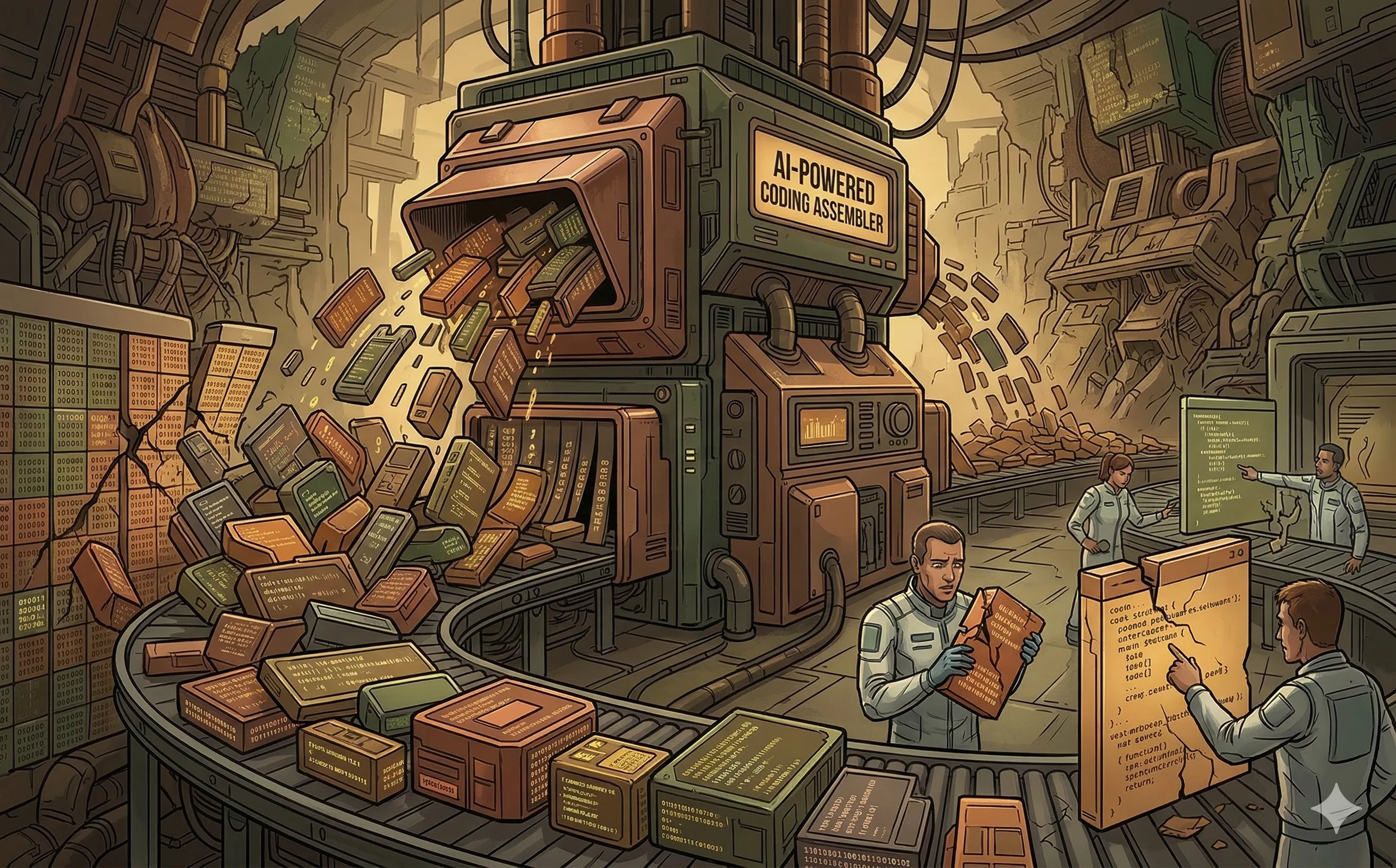

Introduction: The Hidden Cost of Speed
Over the past 12 weeks, we have explored the tactical security challenges of the AI era—from Prompt Injection and BOLA attacks to deepfake biometrics and hallucinated vulnerabilities. But as we conclude this DevSecOps series, we must address a silent, creeping threat that doesn’t trigger a firewall alert or fail a vulnerability scan: Technical Debt.
Technical debt is the implied cost of future refactoring caused by choosing an easy, limited solution now instead of a better approach that would take longer. AI coding assistants like GitHub Copilot and Cursor are incredible accelerators, but they optimize strictly for the now. They generate functional code instantly, but without strict architectural governance, they act as high-speed technical debt factories, creating codebases that are impossible to maintain, audit, or secure in the long run.
1. The Volume Problem and “Spaghetti” at Scale
The most immediate impact of AI on software development is the sheer volume of code being produced. Historically, a developer might write a few hundred lines of production code a day. With AI, they can generate thousands.
- Copy-Paste on Steroids: AI assistants heavily favor generating verbose boilerplate rather than abstracting logic into reusable, modular functions. If a developer needs to parse a JSON response in three different files, the AI will happily generate three slightly different, 50-line parsing functions instead of creating one centralized utility class.
- The Bloat: This leads to massive codebase bloat. The application works perfectly today, but when the JSON schema inevitably changes next year, a maintainer has to hunt down and update the logic in three separate places. In security, complexity is the enemy. A bloated codebase exponentially increases the attack surface and makes vulnerability patching a nightmare.
2. Inconsistent Architectural Patterns
An AI model knows how to write Python, Java, or Rust based on millions of open-source examples. However, it does not inherently know your company’s internal engineering standards.
- Contextual Amnesia: A developer might be working in a repository that strictly uses functional programming paradigms. The developer prompts the AI to write a database connection handler. Because the AI’s training data predominantly features Object-Oriented approaches for database connections, it generates a massive Class structure.
- Frankenstein Codebases: The developer accepts the suggestion because it works. The result is a “Frankenstein” file where functional and object-oriented paradigms clash. When a new engineer joins the team, they cannot discern the application’s actual architecture because every function looks like it was written by a different person with a different philosophy.
3. The Readability Crisis and the “Orphaned Code”
The golden rule of software engineering is that code is read ten times more often than it is written. AI flips this dynamic on its head. It makes writing code trivial, but it makes reading it significantly harder.
- Loss of Intent: When a human writes a complex algorithm, they understand the intent behind it. They leave comments explaining the edge cases they considered. When an AI generates a 200-line regex or a complex SQL join, it just provides the output.
- The Debugging Nightmare: If that AI-generated logic contains a subtle flaw—like a race condition that only appears under heavy server load—debugging it is agonizing. The human developer who “wrote” the code via a prompt doesn’t actually understand the mechanics of the generated output. The code becomes “orphaned”—nobody wants to touch it, refactor it, or secure it because nobody truly understands how it works.
4. Fighting Back: Strict Linting and AI-Assisted Refactoring
To survive the AI era, engineering leaders must shift their focus from writing code to reviewing, governing, and maintaining code.
- Hyper-Strict CI/CD: You must enforce modularity programmatically. Your CI/CD pipeline should include strict linters (like SonarQube or ESLint) configured to fail the build if cyclomatic complexity (the number of branching paths in a function) gets too high, or if duplicated code blocks are detected.
- Using AI to Fix AI: Ironically, the best tool to manage AI-generated technical debt is AI itself. DevSecOps teams are now using LLMs specifically for automated refactoring. Instead of prompting the AI to write new features, developers prompt the AI with: “Analyze these three files, identify the duplicated logic, and abstract it into a single, highly documented utility function with 100% unit test coverage.”
Conclusion of Series 3
The AI revolution in software development is permanent. AI will write the code, but humans must be the architects. If you treat an LLM as a senior engineer and blindly accept its output, your software will collapse under the weight of its own unmaintainable complexity. Security and maintainability are intrinsically linked; you cannot secure a system you do not understand.
This officially concludes our third series, Secure Coding in the Age of AI. Over the past 13 weeks, we have mapped out how DevSecOps must adapt to a world where machines write the software.